


Ci dovrebbe preoccupare il fatto che troppe essenze arboree vengono colpite da parassiti invincibili, ricordiamo l'olmo, il castagno,le drupacee (Ciliegio,mandorlo,susino,albicocco,...),la vite attaccata da l'escoriosi, le palme (comprese quelle autoctone del mediterraneo),l'eucalipto e altre ancora.
Le cause sono molteplici: il trasporto delle piante attraverso i continenti, la selezione genetica rivolta solo al mercato ;le varietà selezionate dai coltivatori erano quelle più rustiche e che producevano frutti più sapidi ed abbondanti, oggi i criteri sono molto cambiati, la ricerca del profitto è il solo obbiettivo.
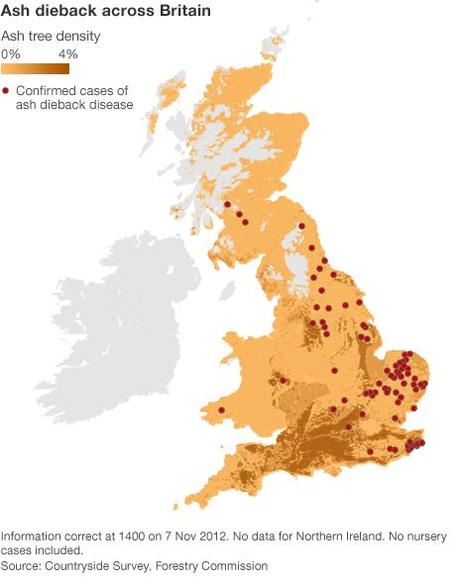
http://www.bbc.co.uk/news/science-environment-20253767Owen Paterson: Ash dieback will not be eradicated
By Mark Kinver and Matt McGrathBBC News Environment Secretary Owen Paterson: "The scientific advice is that it won't be possible to eradicate this disease"Continue reading the main story
Ash dieback outbreak
- Ash disease in Scotland
- Ash dieback checks in N Ireland
- Why is dieback making headlines?
- Pest and disease threats to trees
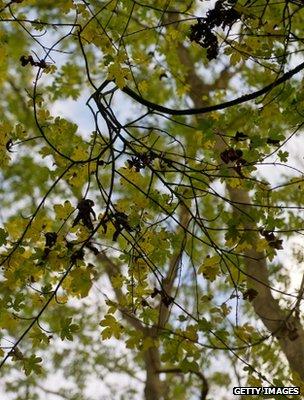 Mature ash trees will not be removed from the landscape, the government's action plan saysConservation groups welcomed the government's assurance that no diseased mature tree would be cut down."The scientific advice is that it won't be possible to eradicate this disease now that we have discovered it in mature trees in Great Britain," Mr Paterson said."However, that does not necessarily mean the end of the British ash."If we can slow its spread and minimise its impact, we will gain time to find those trees with genetic resistance to the disease and to restructure our woodlands to make them more resilient."He told reporters that the arrival of ash dieback meant his department would have to reconsider its priorities."If we are going to really do something radical on the way we handle our forestry in the future and change the priorities, we are going to have to shift resources within Defra.Continue reading the main story
“Start Quote
Regulation must be put in place to ensure this does not happen again”Martin HarperRSPB"There will be some things we do in Defra now that we are going to have to stop doing."Speaking at a briefing, Defra chief scientific adviser Prof Ian Boyd said: "By next season, we could potentially have resistant forms of ash growing in this country."We need to put in scientific research to try and get genetic markers for resistance so that we can go out into our current woodlands that have not been infected and identify trees that might survive relative to those who might not survive."







 Pacman
 Nostradamus
 Magical Cat Adventure
 Snake
Snake